
Portal Space Systems Raises $50 Million for New Rocket Engine – Intermediate – EN
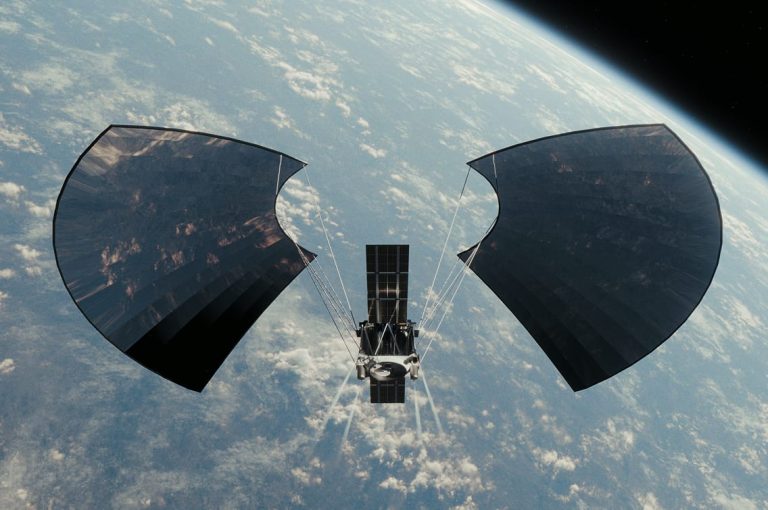
Portal Space Systems, a startup founded in 2021, has raised $50 million in a Series A round and is now valued at $250 million. The company wants to turn a long-studied idea, solar thermal propulsion, into real space missions.
Most satellite engines today either burn chemical fuel or use solar electricity to power small thrusters. Portal’s approach is different. Its engine would concentrate the sun’s heat, use that heat to warm a propellant, and then push a spacecraft forward at high speed. The idea has been studied for decades in government labs, but it has never been proven in orbit.
Founder Jeff Thornburg previously worked on advanced rocket engines in the U.S. Air Force and later helped develop SpaceX’s Raptor engine. After working at Stratolaunch and Amazon’s Project Kuiper, he returned to propulsion with Portal. He says fast movement in orbit now matters because thousands of satellites are being launched and military planners want spacecraft that can shift quickly between orbits.
Portal has received backing from both investors and the U.S. military. The company says its flight electronics already went into space on a recent test mission, another prototype is expected to launch in October, and its first SuperNova spacecraft could fly in 2027. If the system works, Portal could become an important provider of in-space mobility for satellites, defense missions, and future deep-space travel.
Vocabulary Words List
startup — useful word or phrase from the article
Series A — useful word or phrase from the article
valued — useful word or phrase from the article
solar thermal propulsion — useful word or phrase from the article
chemical fuel — useful word or phrase from the article
solar electricity — useful word or phrase from the article
thrusters — useful word or phrase from the article
sun’s heat — useful word or phrase from the article
propellant — useful word or phrase from the article
spacecraft — useful word or phrase from the article
government labs — useful word or phrase from the article
rocket engines — useful word or phrase from the article
Raptor engine — useful word or phrase from the article
propulsion — useful word or phrase from the article
orbit — useful word or phrase from the article
thousands of satellites — useful word or phrase from the article
military planners — useful word or phrase from the article
investors — useful word or phrase from the article
U.S. military — useful word or phrase from the article
flight electronics — useful word or phrase from the article
test mission — useful word or phrase from the article
prototype — useful word or phrase from the article
SuperNova spacecraft — useful word or phrase from the article
mobility — useful word or phrase from the article
satellites — useful word or phrase from the article
defense missions — useful word or phrase from the article
deep-space travel — useful word or phrase from the article
launch — useful word or phrase from the article
Portal Space — useful word or phrase from the article
Systems — useful word or phrase from the article
Fill In The Blanks Listening Practice
Portal Space Systems, a founded in 2021, has raised $50 million in a round and is now at $250 million. The company wants to turn a long-studied idea, solar thermal propulsion, into real space missions.
Most satellite engines today either burn or use to power small . Portal’s approach is different. Its engine would concentrate the sun’s heat, use that heat to warm a propellant, and then push a spacecraft forward at high speed. The idea has been studied for decades in government labs, but it has never been proven in orbit.
Founder Jeff Thornburg previously worked on advanced in the U.S. Air Force and later helped develop SpaceX’s . After working at Stratolaunch and Amazon’s Project Kuiper, he returned to propulsion with Portal. He says fast movement in orbit now matters because thousands of satellites are being launched and military planners want that can shift quickly between orbits.
Portal has received backing from both and the . The company says its already went into space on a recent test mission, another prototype is expected to launch in October, and its first SuperNova spacecraft could fly in 2027. If the system works, Portal could become an important provider of in-space mobility for satellites, defense missions, and future deep-space travel.
Vocabulary Retention Quiz
1. What technology is Portal developing?
2. Why does Thornburg think fast movement in orbit matters now?
3. What engine did Thornburg help develop at SpaceX?
4. What support has Portal received besides private investment?
5. When could the first SuperNova spacecraft fly?
Discussion Questions
How could faster spacecraft change satellite work?
Should governments invest more in new propulsion?
What risks come with military interest in this technology?
Try this article in other languages and difficulties:
English (Beginner), Spanish (Beginner), Spanish (Intermediate), French (Beginner), French (Intermediate), Italian (Beginner), Italian (Intermediate), German (Beginner), German (Intermediate)